The holidays can be especially stressful for patients with gestational diabetes (GDM). Between family gatherings, unpredictable schedules, and carb-heavy meals, many patients worry that eating their favorite holiday foods will send their blood sugar levels soaring.
Instead of policing food choices around the holidays, we are here to equip patients with realistic strategies, reassure them that perfection isn’t expected, and guide them to make choices that protect their health and the health of their baby.
Today, we’ve outlined practical ways to support patients during the holidays without shame or unnecessary restriction.
1. Reminder that skipping meals is not advised
Many people still believe that eating less earlier in the day will “save” carbs for a holiday dinner. In practice, skipped meals often lead to higher post-meal spikes and intense hunger later on.
Key reminders:
- Eat balanced meals and snacks at regular intervals, even on holiday schedules
- Skipping meals increases glucose variability, not control
2. Flexibility > Rigid Rules
Holidays are not the time to introduce restrictive carb counts. Instead of framing meals as “good” or “bad,” think in terms of overall patterns and balance throughout the day rather than a single meal “pass/fail”.
Key reminders:
- One higher post-meal number doesn’t mean failure
- Data is information, not a grade
This mindset is especially helpful for patients using CGM, who may see more data (and more anxiety) during holiday weeks.
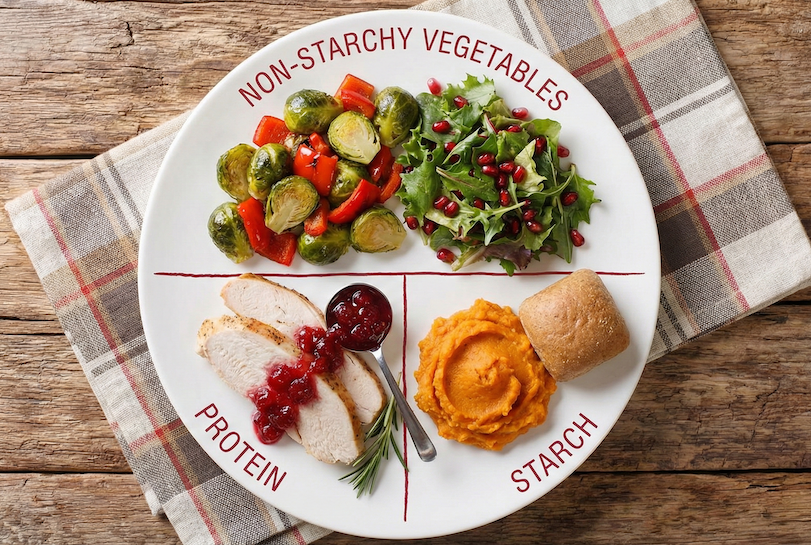
3. Use the plate method as a visual cue
Holiday meals are often buffet-style, carb-heavy, and overwhelming. There are rarely labels available to guide food decisions. A simple visual like the plate method can help build balanced plates without measuring or counting.
Key reminders:
- ½ plate non-starchy vegetables
- ¼ plate protein
- ¼ plate starch or carb-containing foods
This approach supports post-meal glucose control while still allowing traditional foods. No food is off-limits.
4. Plan for carbohydrates
Carbohydrate-rich foods for the holidays are inevitable. Rather than “avoiding dessert,” just plan intentionally.
Key reminders:
- Choose between multiple starches (for example, potatoes or stuffing, not heaping piles of all carbs)
- Eat desserts after a balanced meal and pair with proteins: yogurt, milk, cottage cheese, nut butters, and mixed nuts.
- Adjust portions without eliminating foods entirely
- Plan a walk after a carb-rich meal to mitigate a blood sugar spike
People are far more successful when dessert is planned, not forbidden.
5. Prioritize protein to stabilize blood sugars
Rather than focusing on restricting carbs, put emphasis on the importance of eating protein. Protein helps slow digestion, minimize post-meal glucose spikes, and promote satiety, which is particularly useful during long holiday meals.
Key reminders:
- Prioritizing meats, fish, eggs, or dairy early in the meal
- Adding protein to snacks (nuts, cheese, yogurt, eggs)
- Pairing carb-heavy dishes with protein when possible
Getting enough protein requires intention and planning. Your patients may need to pack snacks to bring with them if they are guests for the holiday events.
6. Encourage short, realistic movement
The days between holidays are often a blur and can disrupt normal routines and healthy habits. Instead of recommending tough workouts, suggest brief, achievable movement to support blood sugar management.
Examples:
- 10–20 minute walk after meals
- Light housework or standing movement
- Gentle stretching between events
- 10 squats after a period of sitting
Even small amounts of activity can significantly impact post-meal glucose excursions.
7. Address sleep and stress directly
Pregnant women often find sleep elusive! Add in holiday stress, and insulin resistance can become even worse. Many women don’t realize their disrupted sleep schedule or unmanaged stress can impact their blood sugars all day.
Key reminders:
- Try to keep your normal sleep routine during the holidays
- Stress hormones impact insulin sensitivity, so cope with stressors in a healthy way (i.e., deep-breathing, exercise, talking with a friend, listening to an audiobook while wrapping presents)
- Holiday expectations are often self-imposed (perfectionism increases stress, not control)
Protecting sleep schedules and managing stress minimizes the impact of the holidays on blood sugars.
8. Use glucose data as a teaching tool, not a threat
Whether using fingersticks or CGM, holidays often create new glucose patterns. It’s critically important to look at the big picture rather than individual meals. This reduces the temptation to “unplug” or look the other way when it comes to holiday meals.
Key reminders:
- Observe trends rather than obsess over single numbers
- Note which foods or meal combinations work best
- Share data openly without fear of judgment
Learning from the data builds confidence and self-efficacy, not constant anxiety and fear.
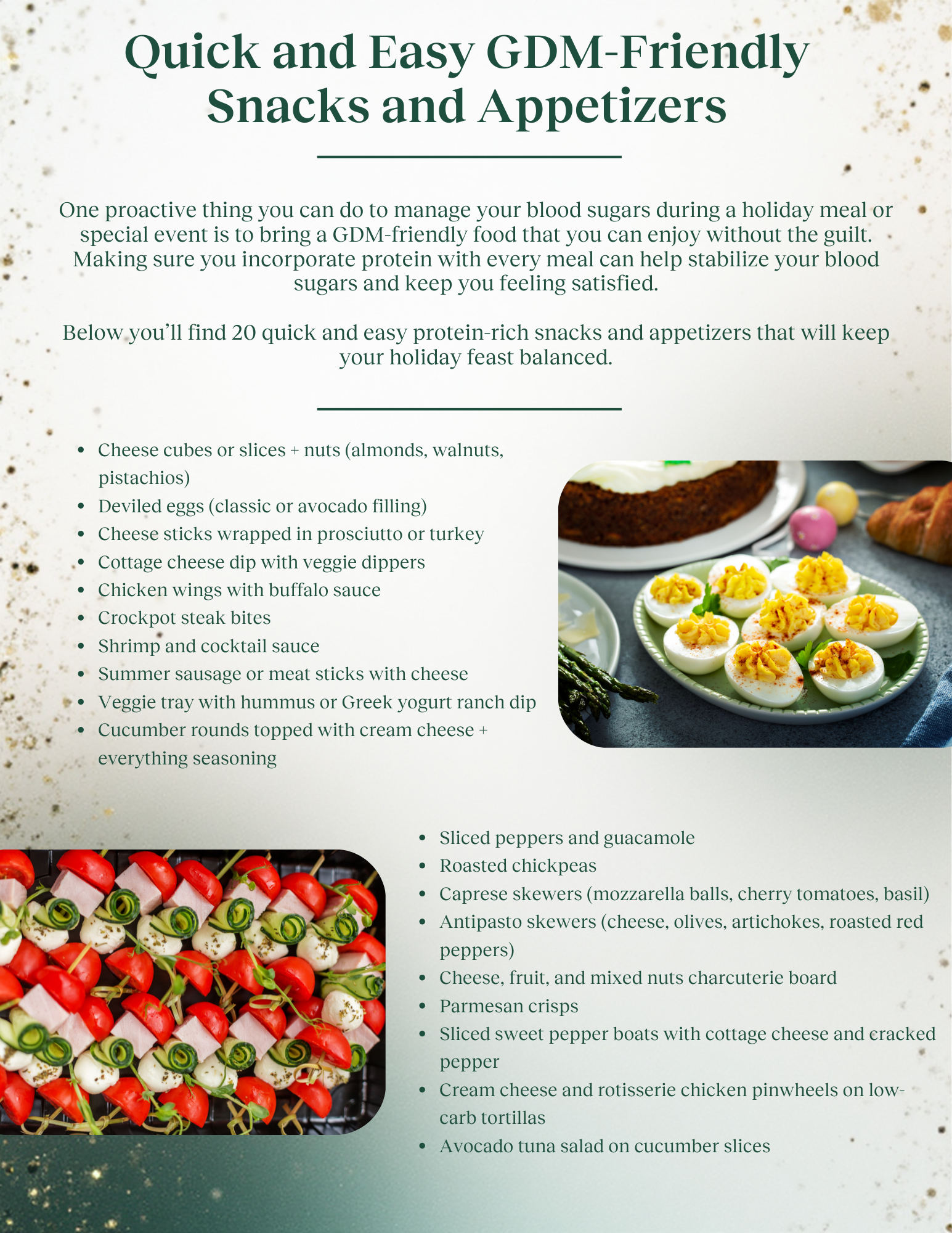
9. Encourage bringing a “safe” dish
One common fear pregnant women have is whether they’ll be able to make good choices when they aren’t in control of the menu. Here’s where bringing a dish can be helpful. Contributing to meals creates a sense of control and reduces the stress involved with making food decisions.
Examples:
- High-protein appetizers
- Roasted vegetables or salads
- Lower-sugar dessert options
Knowing there’s at least one reliable option helps women relax and enjoy the event. And chances are, there will be other guests who will appreciate the healthy option.
10. Reinforce that holidays don’t “ruin” outcomes
This may be the most important message. Objectively, a meal or two is not going to spoil the whole week. Just because you splurged during one meal does not mean the day is busted.
Key reminders:
- GDM outcomes are driven by overall trends and patterns, not isolated meals
- One holiday meal does not unravel weeks of care and attention to blood sugars
- Compassion and consistency matter more than perfection
When people feel supported instead of judged, engagement and outcomes improve.
The takeaway
Holiday nutrition counseling for gestational diabetes should focus on:
- Preparation, not restriction
- Learning from data rather than fearing it
- Flexibility, not perfection
By normalizing challenges and emphasizing realistic strategies, we can improve blood sugars and mental well-being—during the holidays and beyond.